
CVE-2022-20421 漏洞复现
CVE漏洞编号:CVE-2022-20421
google bulletin:https://source.android.com/docs/security/bulletin/2022-10-01?hl=zh-cn
相关patch commit:https://android.googlesource.com/kernel/common/+/19bb609b45fb
环境搭建
aosp编译报错:not found libncurses.so.5
debian 版本太新,需要下载较老的库并放入 /lib/x86-…/ 中
android-kernel 选择较老的分支:android-gs-raviole-5.10-android12-d1
1 | repo init -u https://mirrors.tuna.tsinghua.edu.cn/git/AOSP/kernel/manifest -b android-gs-raviole-5.10-android12-d1 |
然后进行编译 Android 12 及以前的版本只能通过 build.sh 的方式进行安装,对于 pixel 6 设备而言,只需运行 ./build_slider.sh 即可。
使用 Android SDK emulator 模拟运行目标安卓内核:
好像 kernel 格式不太对,问了 GPT 说是使用的模拟器版本太老。。。
这里更换为对应sdk 31,使用 avd_manager 下载预编译好的 avd emulator 版本为31。
然后由于需要 avd 的内核版本(5.10.136)与 自定义版本一致,所以重新选择对应分支
1 | repo init -u https://android.googlesource.com/kernel/manifest -b common-android12-5.10-2022-08 |
安装完成后使用 emulator 启动,然后使用 adb shell 连接 shell 实现交互,先输入 adb root 命令可以获取 root shell。
emulator 启动命令如下:
1 | !/bin/bash |
发现在该版本,已经被修复了,因此简单按 patch 去掉修复代码,原修复代码如下:
1 | index 6fee6d5..0a4f0e7 100644 |
再次编译得到存在漏洞的内核版本。
漏洞原理
基于 binder transactions 的 UAF
Binder Transactions
在 Binder 中,进程之间 Binder IPC Transcations 来交换信息,共享数据。
由 kernel driver 翻译交换信息的数据对象。
对于 binder handle 数据对象,可以通过 transactions 共享进程句柄给另一个进程:
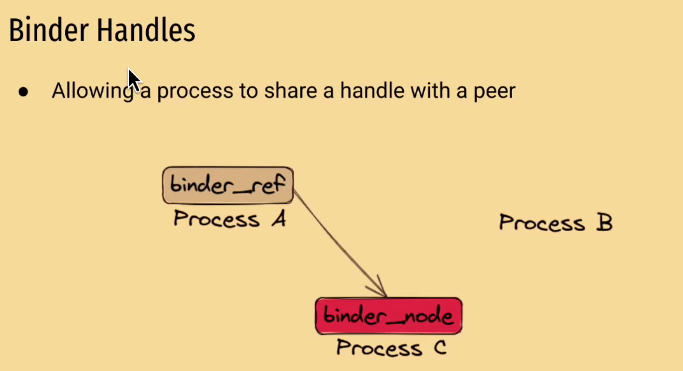
transactions 向进程 b 发送 binder handle 对象
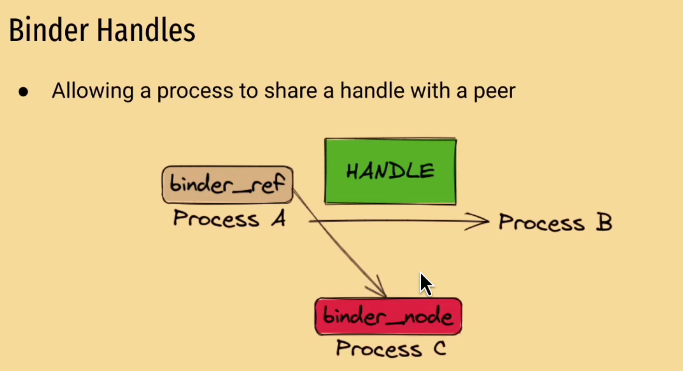
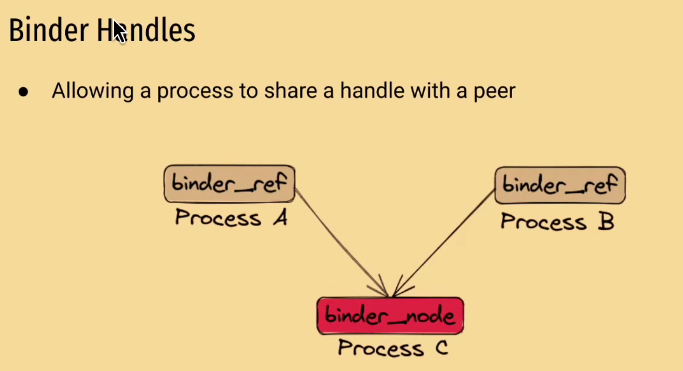
然后 kernel driver 侧会将 handle 对象翻译为在 进程 b 创建新的对 c 的进程引用
Translating Handles
kernel driver 侧翻译过程如下:
首先在目标进程创建一个新的 binder ref
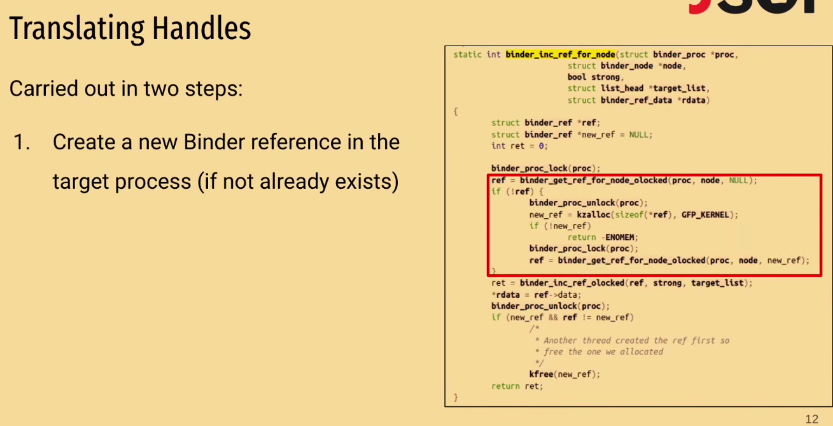
然后再增加其 引用计数。
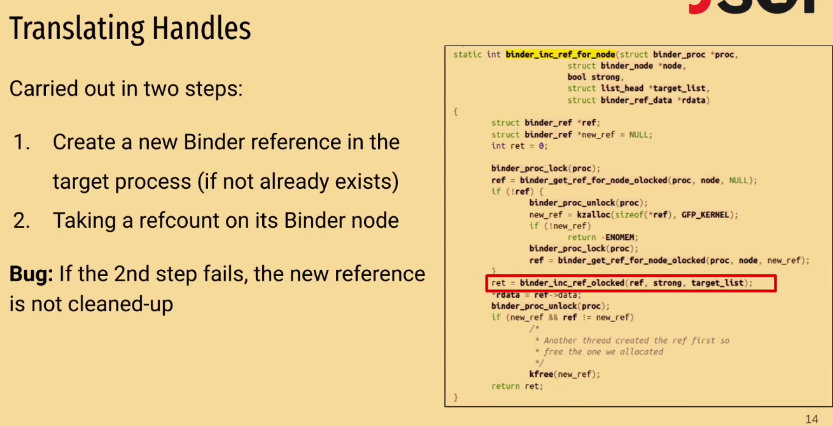
问题出在如果第二步失败了,没有清理掉该 ref。
那么如果进程 b 直接 exit,致使第二步失败,并且进程 b 会将所有 ref 清空,但此时执行 transaction 的进程 a 仍然会将做翻译。
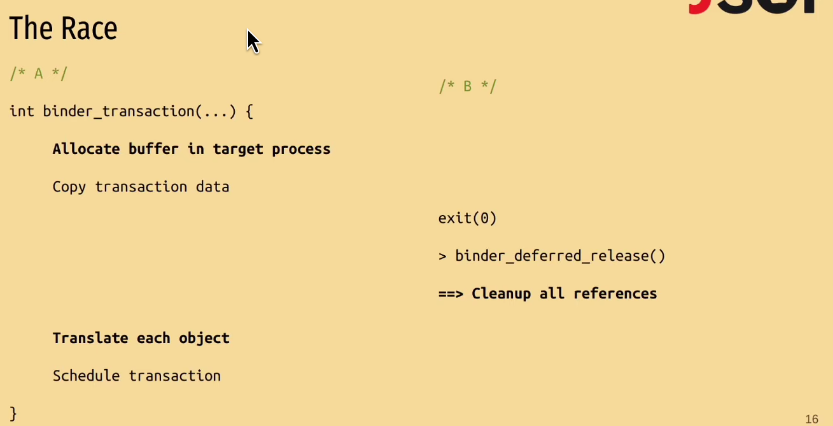
进程 a 不会清空 ref,为进程 b 创建新的 ref,此时该 ref 已被 释放,但是 进程 c 中仍然保有该引用。同时如果后面 c exit,会在 binder_derred_release 函数中再次访问到 b 释放的 bind_proc 对象。
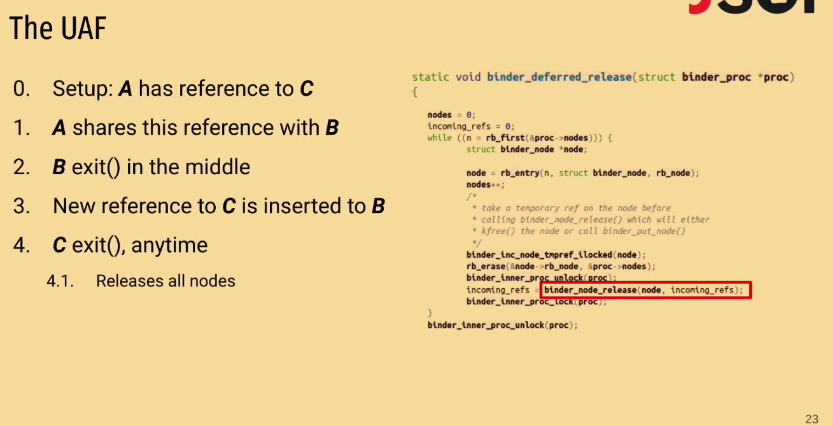
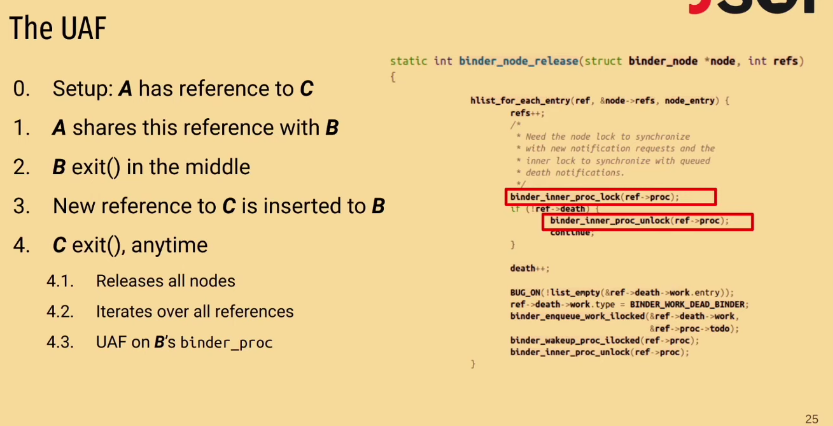
具体逻辑位于 binder_node_release 函数中,会通过 binder_inner_proc_lock 以及 ..unlock 函数来操作已释放的对象 ref->proc。
漏洞利用
设置 A,B,C 三个进程,A 存在对 C 的 binder_ref,同时 A 将该 binder_ref 共享给 B,此时 B 会在中间 exit 导致 binder_proc 被释放,同时由于 binder_ref 已经被创建,且缺少释放逻辑导致其仍然可被 C binder_proc 的 refs 指向到。存在 UAF。
当 进程 C 退出时,会调用 binder_deferred_release->binder_node_release,释放其 binder_node 对应的所有 binder_ref(包括已释放的 B),此时会调用 binder_inner_proc_lock 函数 对 binder_ref->proc 加自旋锁,即 binder_proc->inner_lock +1。
有关 binder 的基础内容可以参考:
binder internals
Attacking Android Binder: Analysis and Exploitation of CVE-2023-20938
binder_internals(本人简化版)
spinlock
spinlock (自旋锁),是一种令 cpu 不进入休眠状态持续空转的🔒。其一般用于竞争窗口较短,占用锁时间不长的情况。binder_inner_proc_lock 函数即调用了该 spin_lock 为 binder_proc->inner_lock 加锁
1 |
|
其参数 spinlock_t 结构体定义如下:
1 |
|
可以看到主要是由 locked , pending(locked_pending), tail 组成。长度共4字节(union 联合体定义),其内存布局如下:
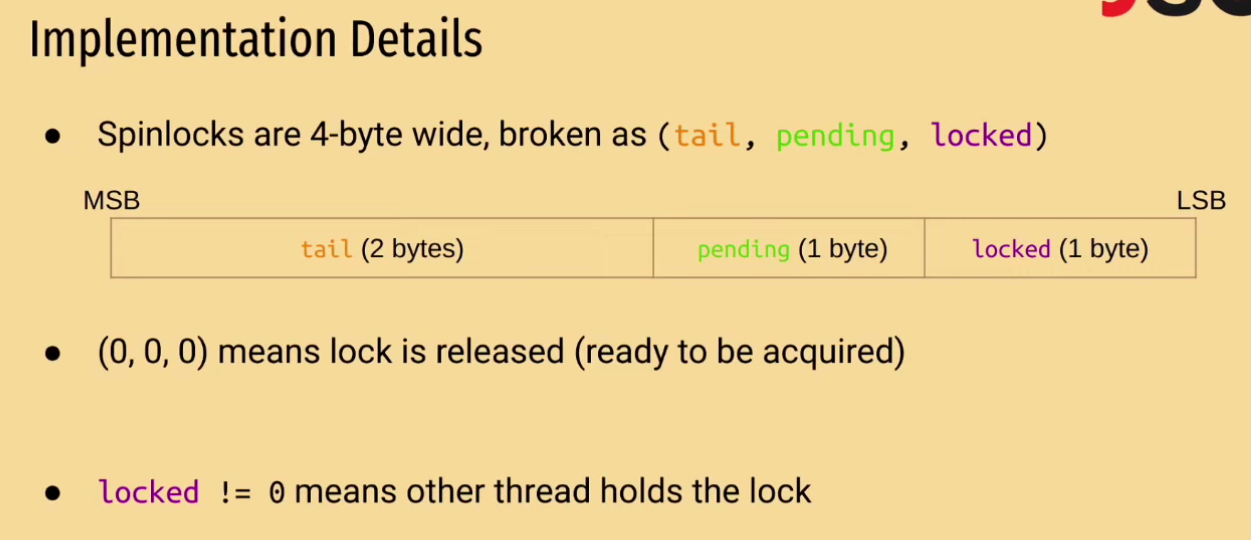
简化的spin_lock 以及 spin_unlock 伪代码如下:
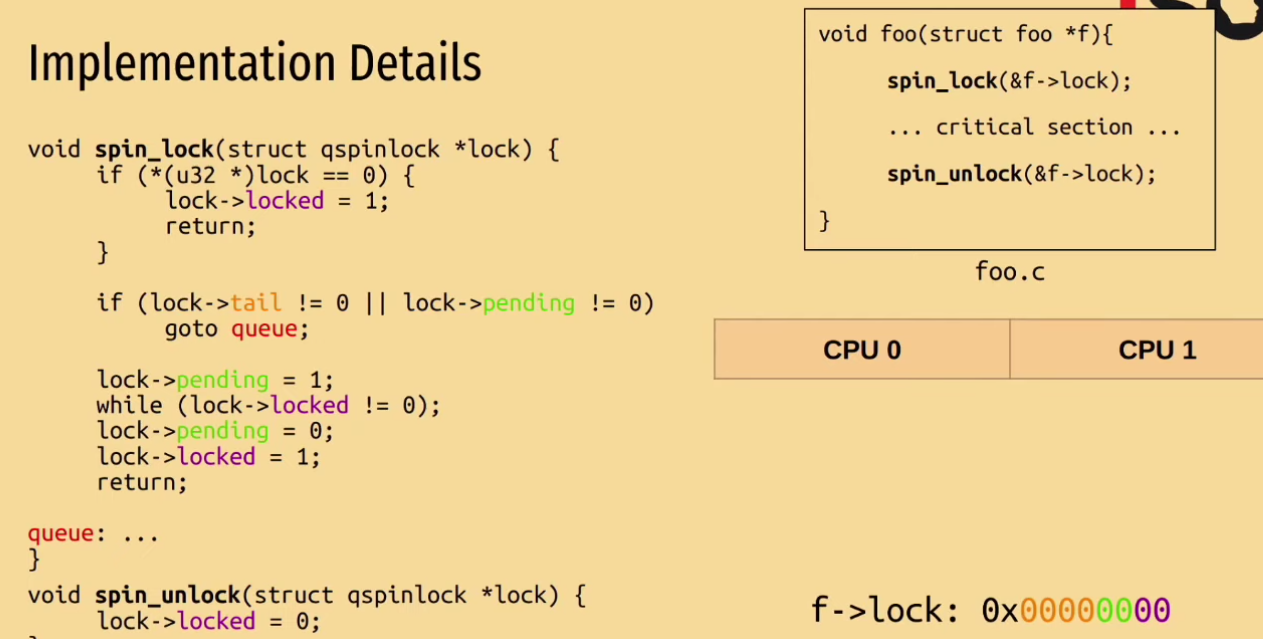
我们在该漏洞中要利用的链路为 起初 u32 lock != 0 。lock->tail != 0 || lock->pending !=0 然后通过 UAF 令 lock->locked == 0 其会将 lock->pending 以及 lock->locked 都设置为0 (spin_unlock)。
然后假设以下流程,我们在 进程B 退出后重新申请回该对象,并且设置其 inner_lock 所处 offset 位置为非 0 值。然后在 CPU 0 上,我们令 进程 C exit 退出释放该对象。此时 其会在 spin_lock 处等待。然后我们再从另一个 CPU 上释放 obj对象,lock 并没有被改变,仍然存在。然后我们重新申请对象 obj2,而刚好该 obj2 的 LSB 为0,然后就会将 第二字节(pending byte)也修改为 0。此时就会有一个指针地址错位。
需要注意安卓本身默认开启了 # **CONFIG_INIT_ON_ALLOC_DEFAULT_ON**=y 其会在对象初始化时 清零 对象内存。所以在第 5 步需要作 race,让 CPU 0 减慢速度从而在 obj2 成功申请后才会修改 pending byte。这里参考的是Racing against the clock – hitting a tiny kernel race window
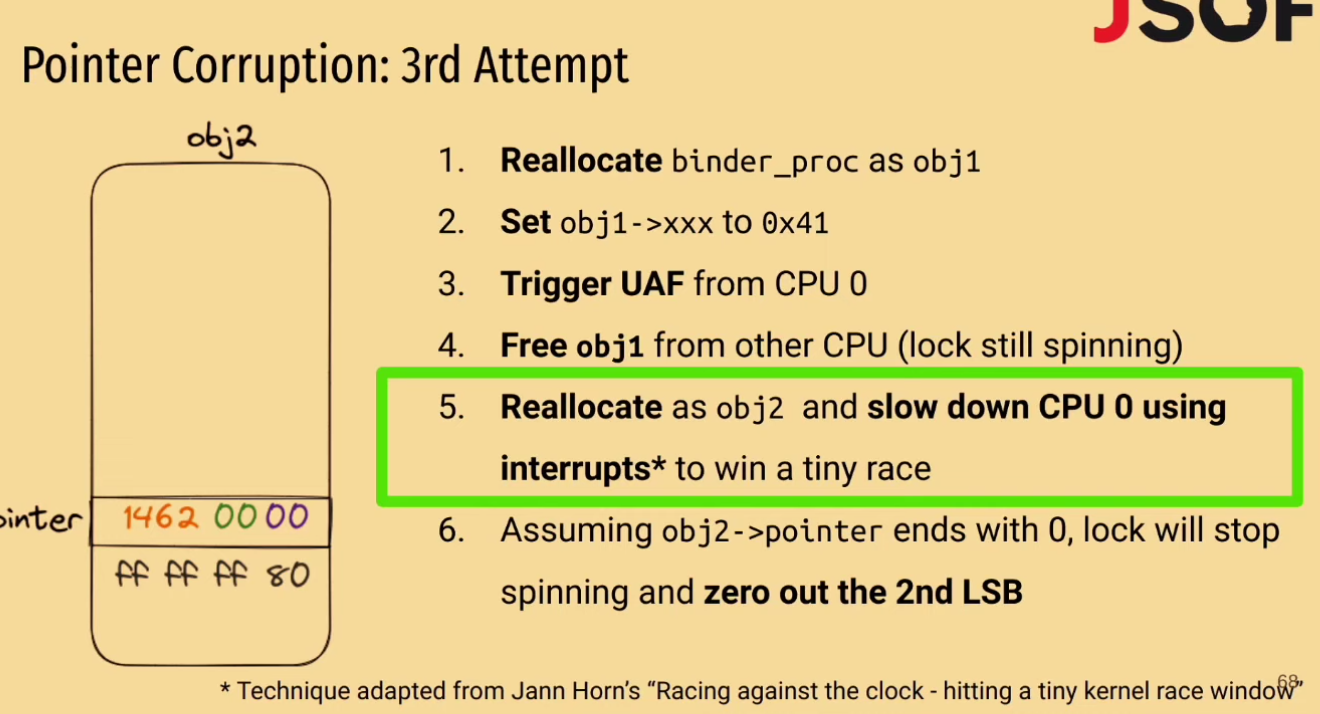
然后通过找到合适的 obj(kmalloc-1k)。
- obj1:其
inner_offset处 LSB != 0;(tty_struct) - obj2:其
innder_offset处 LSB == 0,且为内核指针;(fd_table)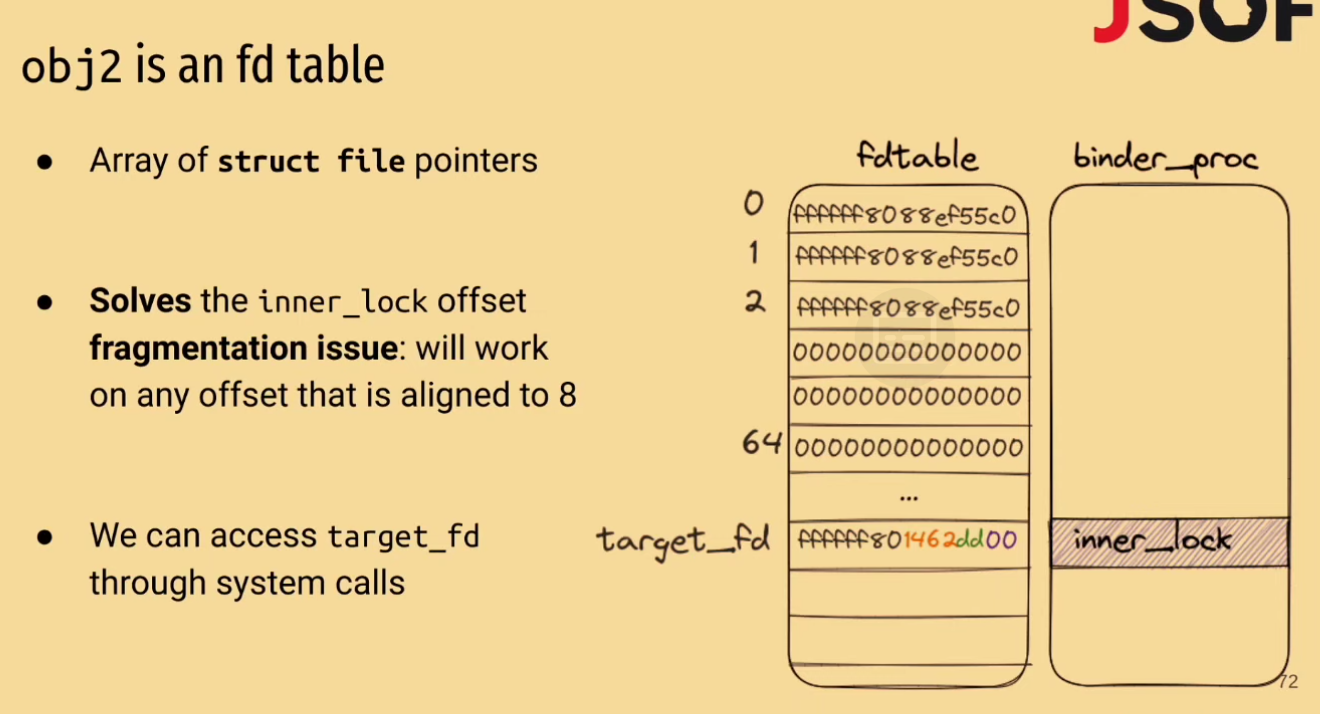 fd_table 为存储了一系列
 file结构体的指针,其内存布局如下,通过利用我们可以达到将 LSB == 0 的 pending byte 也清零。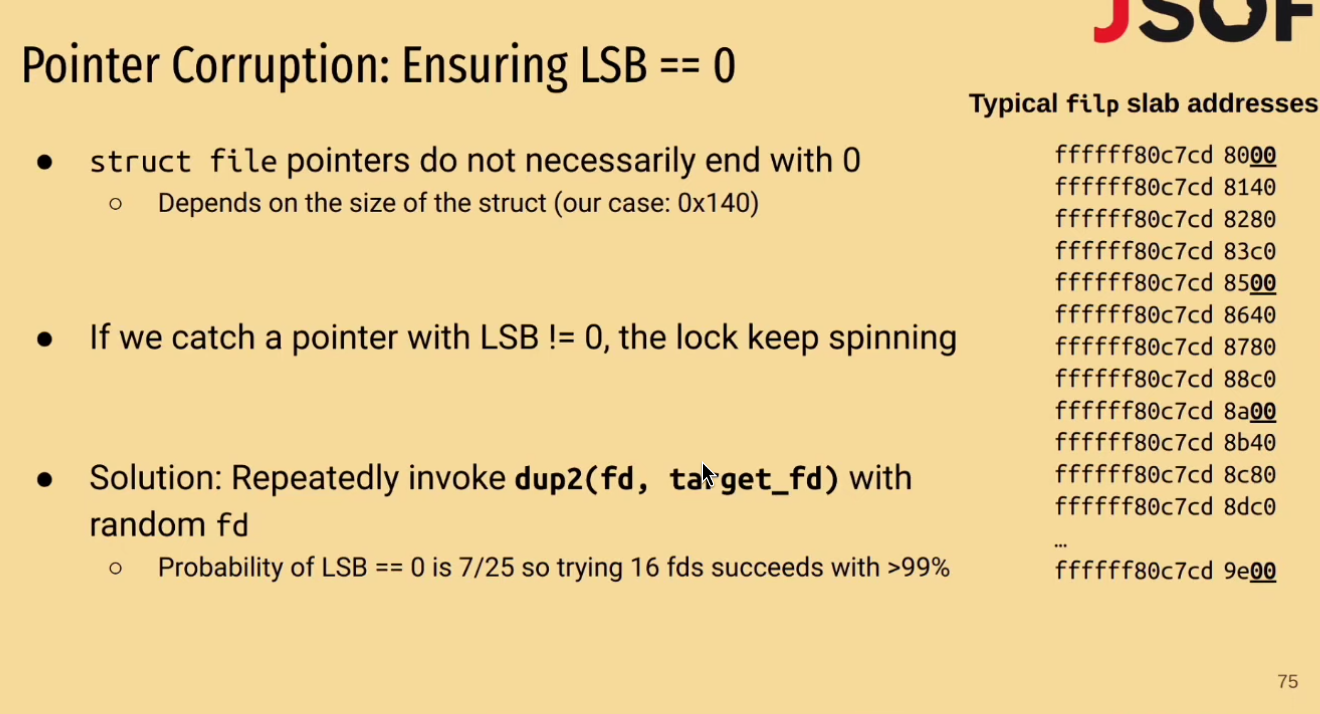 我们需要构造内存布局如下,如果成功篡改,即可实现将 filp 指针指向 喷射的对象(tty_struct)地址
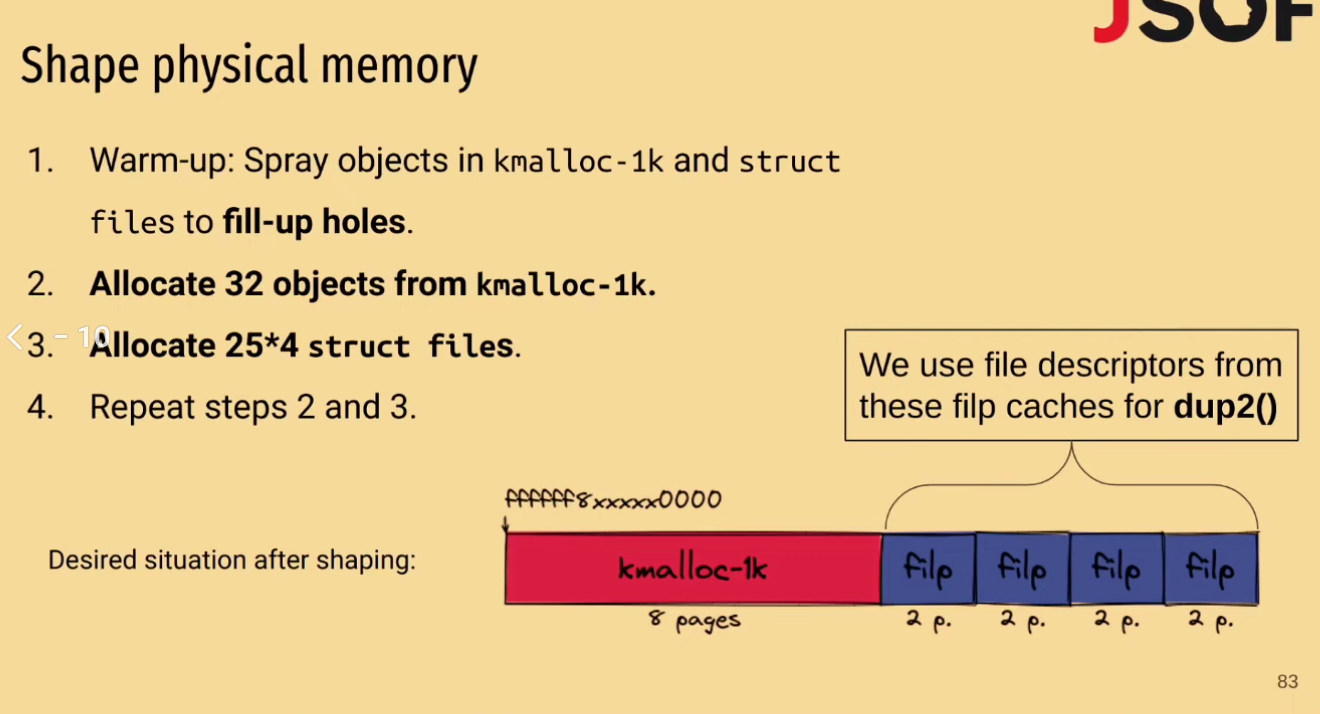 此时我们就可以通过 close(vuln_fd) 来释放目标对象(tty_struct),到这里就实现了 tty 的UAF,然后使用 pipe_buffer 来实现内核的任意地址读写。
漏洞复现
需要 ANDROID_NDK_HOME 环境变量,在 android studio 中下载。
下载 badspin 源码,由于该源码默认编译架构为 aarch64,而我们模拟器上默认的只有 X86_64 架构,因此需要修改编译配置。
注意 git repo 里的 libsepol 是编译好的,最好先 make clean 一下。
可以添加VERBOSE=1环境变量来获取更多调试信息
有一段初筛检查,因为我们是 patch 的,所以版本号肯定是修复后的,需要把这一部分代码注释掉:
然后需要在 ./src/dev_config.h 中添加我们设备的信息:
似乎卡在了触发 UAF 这一步,不过观察模拟的日志输出可以发现触发了 Kernel BUG,并且内核运行卡死了,应该是有效果的。
下面就是进行漏洞调试以及结合漏洞原理进行分析了。
🌿了,这个漏洞后续提权是针对的 arm64 架构。但是现在 Android Studio 的 emulator 默认不支持与宿主机不同架构的 avd 模拟了。
按照该 link 可以更换旧版模拟器,但是由于 Android 12 对应 API 为 31,需要低于 28 才能跨架构模拟。所以这条路基本凉凉了。感觉想继续下去要么真机,要么在 x86 上搞了。
继续尝试在 x86_64 上进行复现。。。 spin_lock 在不同架构上实现不同,还是得在 aarch64 上实现。。。其实理论上应该除了后续提权操作时绕过 addr_limit 以及 UAO 防护时可能会不同外,其他应该都问题不大。
exp 详解
对 kol 大佬的 exp 代码的理解:
1. 获取 inner_lock 的偏移。
会对各种变量,锁变量进行初始化。
然后会创建三个子进程 a, b, c。调用 do_client 函数。三个进程分别调用 do_client{a,b,c} 函数
a 进程会初始化一个 futex 锁变量 lc_watch(light_cond_init_shared)。用于监控来自 c 进程的 death notification。然后注册 b 进程的 death notification。调用 binder_enter_looper 函数进入 looper 开始接受进程 b/c 的 binder 请求;
a 进程会等待来自进程 c 的 binder_node 的 strong handle;
c 进程会进入 looper 接受请求。同时创建一个 sending thread,其会向 a 发送包含 cookie=0xcccccccc 的binder_node 的 transaction,然后等待 lc_c_thread_exit_post 锁变量。
a 进程接受到 c 发送的 transaction,发送 binder_free_transaction_buffer 来释放。a 进程 broadcast lc_c_thread_exit_post 信号,然后等待信号 lc_c_thread_exit_pend。
c 进程 fork 的线程 exit,然后 broadcast lc_c_thread_exit_pend
a 进程会注册进程 c 的 death notification(按 gpt 说法是注册也会增加其 node 的引用计数,从而会影响 node 的释放)。
a 进程创建 monitor 线程,绑定在 cpu 3。等待 lc_watch 信号;
a 进程向进程 b 发送 从进程c获取到的 binder_node 的ref。注意这里发送的 transaction 包裹的 ref 是 exp 利用所要用到的 fd_list 内存(应该是文件描述符 int 数组),发送前就会 broadcast lc_watch 信号。
a 进程创建的 monitor 线程接受到 lc_watch 信号开始等待 来自 b 的 death notification (0x5858585858585858)。
b 进程则创建了 要喷射的 ptmx 对象(16个)大小内存,并且向内存中每4字节 LSB 写入 0x41。然后由于在 detect_mode 下,需要创建 ptmx (echo+blocking模式),并创建了 blocker_thread 线程,该线程会绑定 cpu 0 ,并设置 write 阻塞。然后等待 lc_spray_tty_post 信号。
b 进程继续向下执行,enter_looper 接受其他进程 transaction。绑定 cpu 3。然后 while 循环等待 binder.vmstart 变为 AB_MAGIC,该 AB_MAGIC 会在 进程 a 发送 weak_refs 后被写入 transaction 数据中。也就是说 b 发现 a 进程开始发送就要启动destroy操作,这样才能大概率触发漏洞。
b 进程调用 binder_client_destroy 函数 unmap 掉 binder 内存。内核会释放其 binder_destroy 进程。然后 b 进程绑定 cpu 0,等待 lc_spray_tty_post 信号。
a 进程 monitor 线程接受到 b 的 death notification。
a 进程发送完 weak_refs 后读取 transaction 是否存在 BR_FAILED_REPLY ,应该是指 b death 后 返回的。
a 进程释放 strong_handle,然后 broadcast lc_wakeup_c 信号。等待 c 的 death notification;
c 进程继续运行,broadcast lc_spray_tty_post 信号,等待 lc_spray_tty_pend;
b 进程开始运行,目前为 detect mode,因此会先运行 blocker_thread。向 /dev/ptmx 中写入前面构造 0x41 的数据,然后直接 broadcast lc_spray_tty_pend 信号,进入 sleep(0.5),等待 c 进程 uaf;
c 进程继续,绑定 cpu 4,开始尝试触发 UAF,执行 destroy 操作;
b 进程查看 c 进程是否已经死亡;死亡则返回-3;否则尝试读取 ptmx 查看是否有能够看到 LSB != 0 的数据 offset。
a 进程检测到进程 c 的 death notification,检测到后在 ctx->sync_var_c_died 标记 c 已死亡,此时 C 已经退出 spinlock 自旋锁。
a b c 进程退出
2. 提权
首先获取到上述步骤获取到的offset,实验内核 inner_lock 偏移为 576(需要 >= 520);同时检查是否 cpu 核心数量是否超过 8。
创建 graveyard 进程用来接收其他进程发送的 fd,从而可以维持其引用计数,防止被提前释放,为后面的 利用做准备;
创建 pipe process ,用于等待后续进行管道的喷射;
调用 do_exploit 函数,正式开始提权利用;
创建 fd_master_process ,然后会等待 lc_finish_shaping 信号。
fd_master 进程会创建 dup process spawner 子进程 ,子进程会等待命令 SPAWNER_CMD_NEW_DUP_PROC 以及 SPAWNER_CMD_NEW_SHAPER_PROC
然后 fd_master 打开 NR_PTMXS=4000 个 /dev/ptmx 文件;创建 128 * NR_OBJECTS_FILP * sizeof(int) 大小的文件描述符列表;创建 NR_PIPE_PROCS * NR_PIPES * 2*sizeof(int) 大小的pipes 空间;
fd_master 向 spawner 子进程发送 SPAWNER_CMD_NEW_DUP_PROC 命令;子进程收到后会 创建 dup process 绑定到 cpu 0。dup process 会 dup 大量fd。
fd_master 向 pipe process 发送用于后续与每一个 pipe_proc 通信的 sockfd。
fd_master 进行 shaping memory 工作,NR_SHAPERS=5 向 spawner 发送 SPAWNER_CMD_NEW_SHAPER_PROC 命令。spawner 创建子进程 shaper_process 绑定 cpu 4。其单个进程会 打开 NR_FDS=30000 个 /dev/hwbinder 或者 libc.so 文件(跟据 进程 idx == NR_SHAPERS-1, 即最后一个 shaper proc),然后其会给 ctx->sync_var_shapers +1,然后等待信号 lc_shaper_done。
fd_master 向 dup process 发送临时 fd,使 dup process 进一步向下执行。完成后 broadcast lc_finish_shaping
fd_master 等待 所有 dup process 完成,而 dup process 会进一步等待信号 lc_start_dup;
do_exploit 主函数继续向下执行,新建 timer_master_process 进程,本体继续向下执行 vuln 函数,vuln 函数与上面第一部分流程类似。
timer_master_process 进程绑定在 cpu 0,然后创建 timer_thread 线程,并等待 c 进入 spinlock ,即 第一部分中 lc_spray_tty_pend 信号,只不过这里该信号由 timer_thread 线程控制。
timer_thread 线程会绑定 cpu 4,使用 timerfd_create 创建定时器对象,使用 epoll1_create 创建 epoll 实例,监听创建的定时器对象,然后等待 lc_timer_proc 信号;
vuln 函数 b 进程执行到最后会向ptmx中写入数据,然后 free 掉 ptmx write buf 并将其全清零,然后 broadcast lc_timer_proc 信号,返回到 do_exploit 函数;
do_exploit 函数等待 fd_master 继续执行完成返回利用结果以及 被篡改的 tty_struct 以及 pipe_buffer;
timer_thread 线程设置了定时任务,然后 broadcast lc_spray_tty_pend 信号 触发进程 c 退出。然后 timer_master 进程也会向下执行,其会先 usleep(USEC_SKEW_WAIT_FOR_USE) 然后 broadcast lc_start_dup 信号,等待 timer_threads 完成,该操作即 tiny race,放慢了 c 的执行速度,从而先让 dup process 申请并初始化完成后才去修改 pending byte。
此时 dup process 开始进行 dup 分配 fd_list 对象,完成后 broadcast lc_dup_process_close_post 信号,然后会检查其 fd 是否存在被篡改且篡改成功的,成功会返回 dup_cmd_prepare_tty,然后其会接受来自 fd_master dup_cmd_done 来关闭被篡改的 fd,完成所有fd会返回 dup_cmd_done。
fd_master 继续执行,接收来自 dup process 的响应,如果为 dup_cmd_prepare_tty 则证明成功,向 dup process 发送 dup_cmd_done 触发 tty_struct 的释放,然后开始喷射 pipe_buffer。
pipe process 接收到后执行 pipe 系统调用 创建 pipe_buffer ,并将 pipe_fd 返回给 fd_master;
fd_master 接收到 pipe_fd 后 cleanup 前面申请的各种对象;
然后开始遍历 ptmx 以及 pipe 查找 uaf 的 tty_struct 以及 pipe_buffer 对象。其余的对象就直接关闭释放,成功后返回主函数 ptmx 以及 pipe 的 fd。
do_exploit 函数
调试过程
原仓库本身是为Pixel 6,Android 12/13, Samsung Galaxy S22/S21 Ultra 型号设计,直接跑并不能跑通,支持型号如下:
1 | make list |
leak_inner_lock_offset 返回 -2
直接在 c 释放的地方下断点 binder_node_release (同时最好启动时先关闭 kaslr 方便调试)。
1 | echo 0 > /proc/sys/kernel/kptr_restrict |
说明 /dev/ptmx 没有命中
调试发现确实实现了 tty_struct 申请回已释放的 binder_proc,而且 c 进程卡在 spin_lock 函数。
查看 ida 发现与动态调试类似,其只判断 lock 字节,并没有 pending 等逻辑
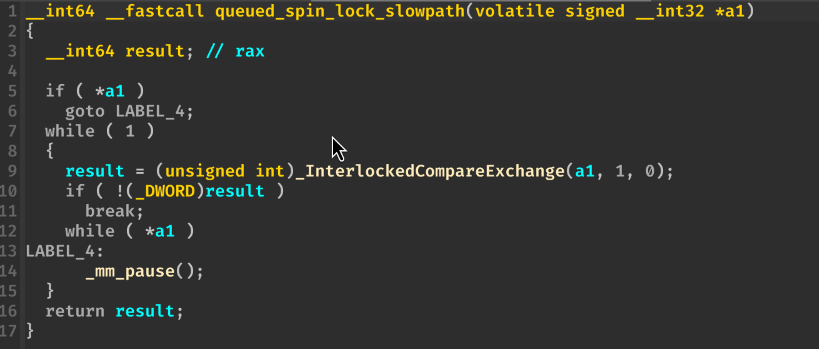
查看 android kernel 源码,其实问题主要出在 virt_spin_lock 函数
1 | void __lockfunc queued_spin_lock_slowpath(struct qspinlock *lock, u32 val) |
virt_spin_lock 函数定义如下,从注释可以发现如果在 hypervisors 上会将 spin_lock 退化为 TaS,其对应 config 参数为 CONFIG_PARAVIRT,默认为 y。
1 |
|
该设置仅存在于 x86 架构下,x86_64 下 spin_lock 只会循环等待 LSB 即 locked 字节变为 0,而并不会进行 pending 等字节的操作。因此还是只能在 arm64 架构上进行复现,当然可能可以修改CONFIG_PARAVIRT 来进行复现,笔者没有进行进一步尝试。
先编译了一版 arm64 架构的 kernel 用 ida 查看,可以发现逻辑明显不同:
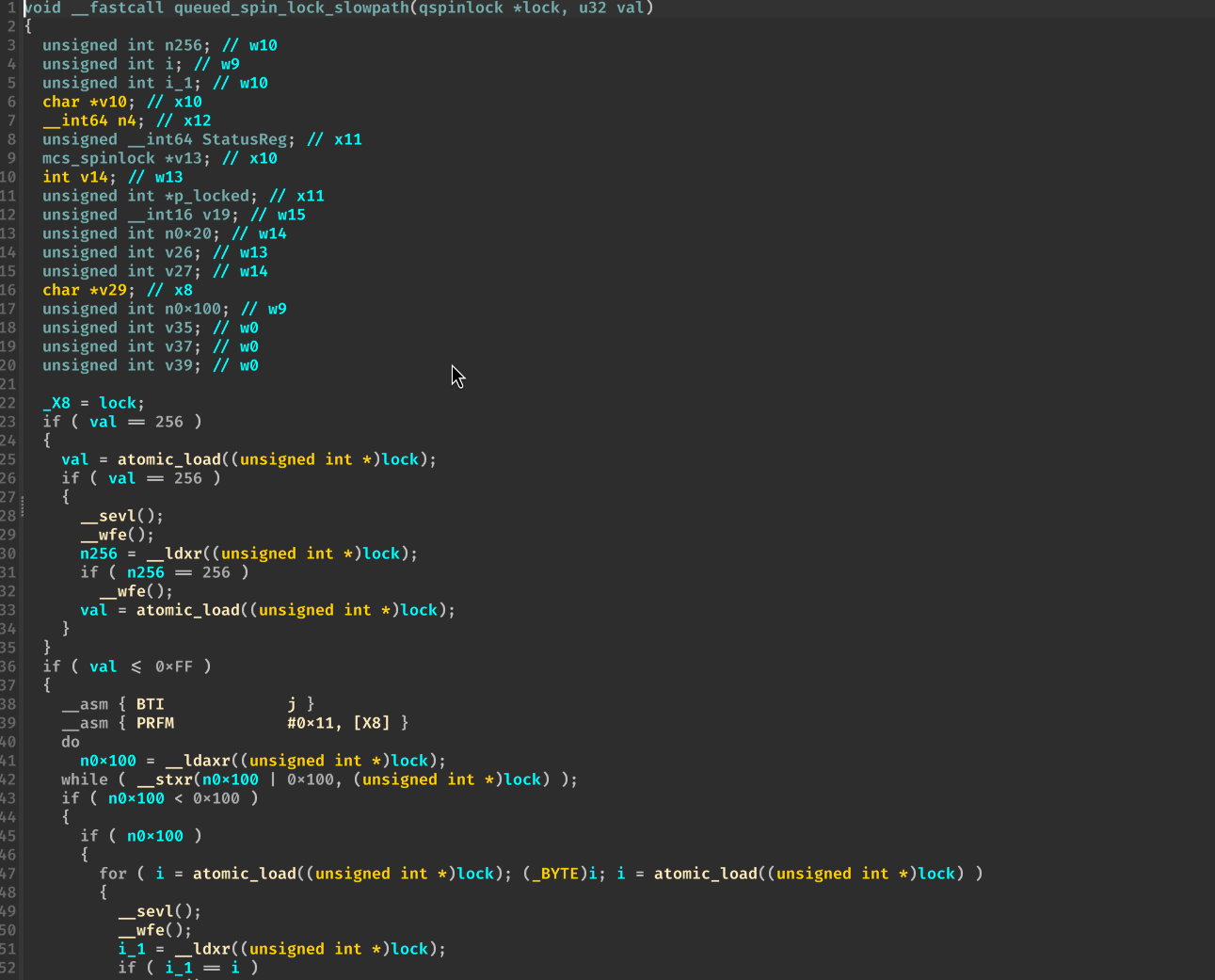
在 mac 上继续尝试~
launcher 命令与上面一样,不过需要把 -data 参数去掉,不知道为什么(
然后还需要再像上面一样修改 dev_config.h 即可运行。
VFS: file-max limit 170065 reached
执行到 SYSCHK(epoll_create1(0)) 时 kernel 显示 file-max limit 。
内存不够,包括后面可能 在 epoll_add 时候寄掉也可能是这个问题,设置qemu 内存 8GB 即可
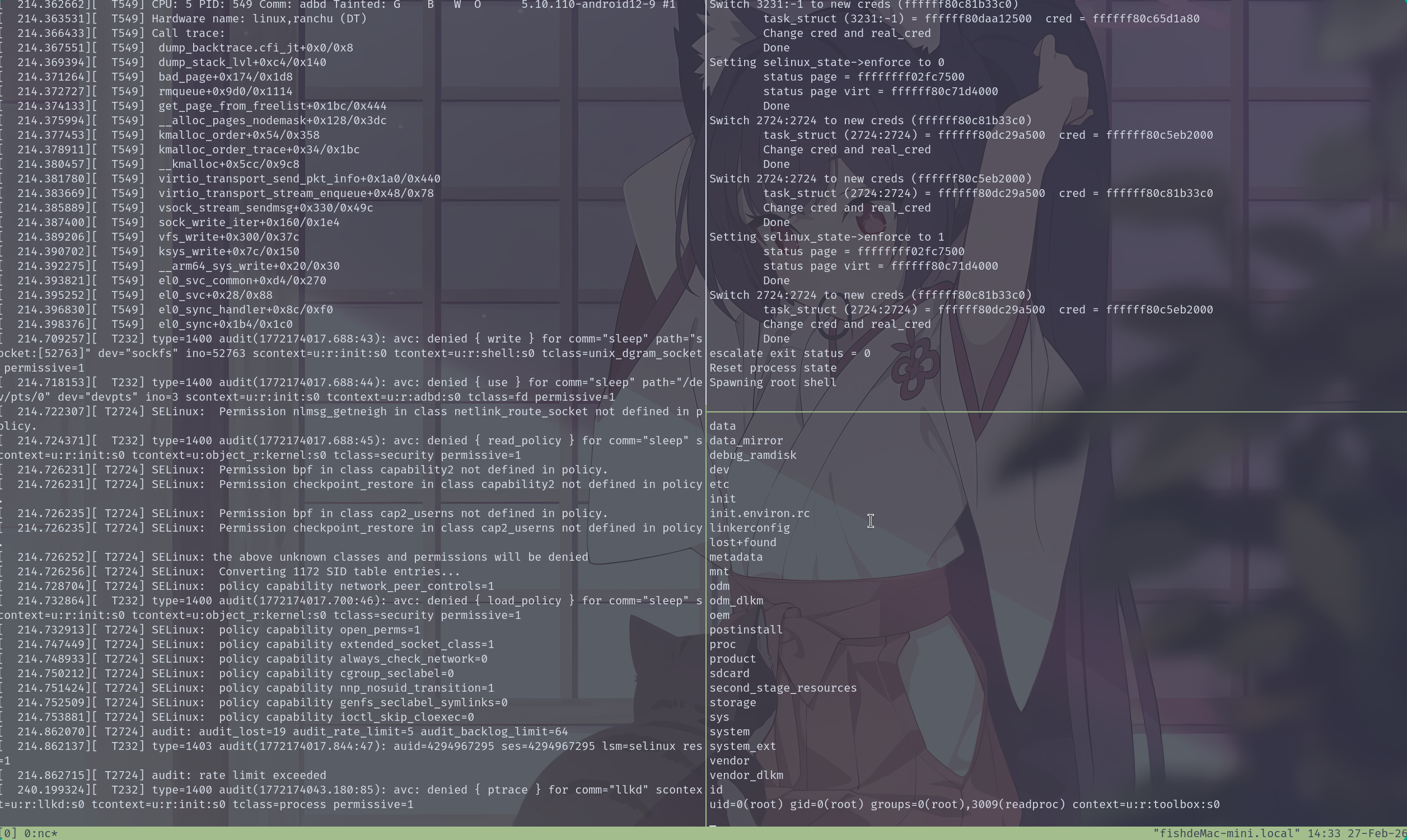
最终成功利用,截图如下,右下角获取到目标 root shell:
.jpg)